Rising Interest Rates for Small Business: Fixed vs. Variable SBA Loans
How rising interest rates affect SBA payment planning: questions about fixed and variable terms, lender documents and your business cash flow.
Guide · · Updated Oct 26, 2026 · 5 min read
Rising interest rates can leave small-business owners wondering what changes for their own financing. This guide narrows the question to one place: how a rate increase can reach the payment on SBA financing. SBA 7(a) and 504 loans are the worked examples. You will not find loan rates, fees or payment amounts here, and the guide does not pick a product for you.
Dated update, October 26, 2026. The Federal Reserve material below is a 2023 press release, so read it as history. This guide states no current rate. The SBA 7(a) and 504 pages were retrieved on October 26, 2026. They are undated and may have been worded differently in 2023.
Start with the contract, not the headline
On July 26, 2023, the Federal Open Market Committee lifted its federal funds target range to 5.25 to 5.5 percent. Treat that as one dated policy decision. It is neither today’s rate nor a rate on any loan.
The statement does not mention small-business loans, SBA programs or lender pricing, and the SBA pages used here do not connect a move in that target to the rate on a particular loan. The Fed’s decision records what happened on one day. Your loan agreement is what tells you what happens to your payment.
What SBA says about 7(a) payments
SBA’s 7(a) page says repayment terms vary. For most 7(a) term loans, the business pays principal and interest every month out of its cash flow. The page then describes two situations:
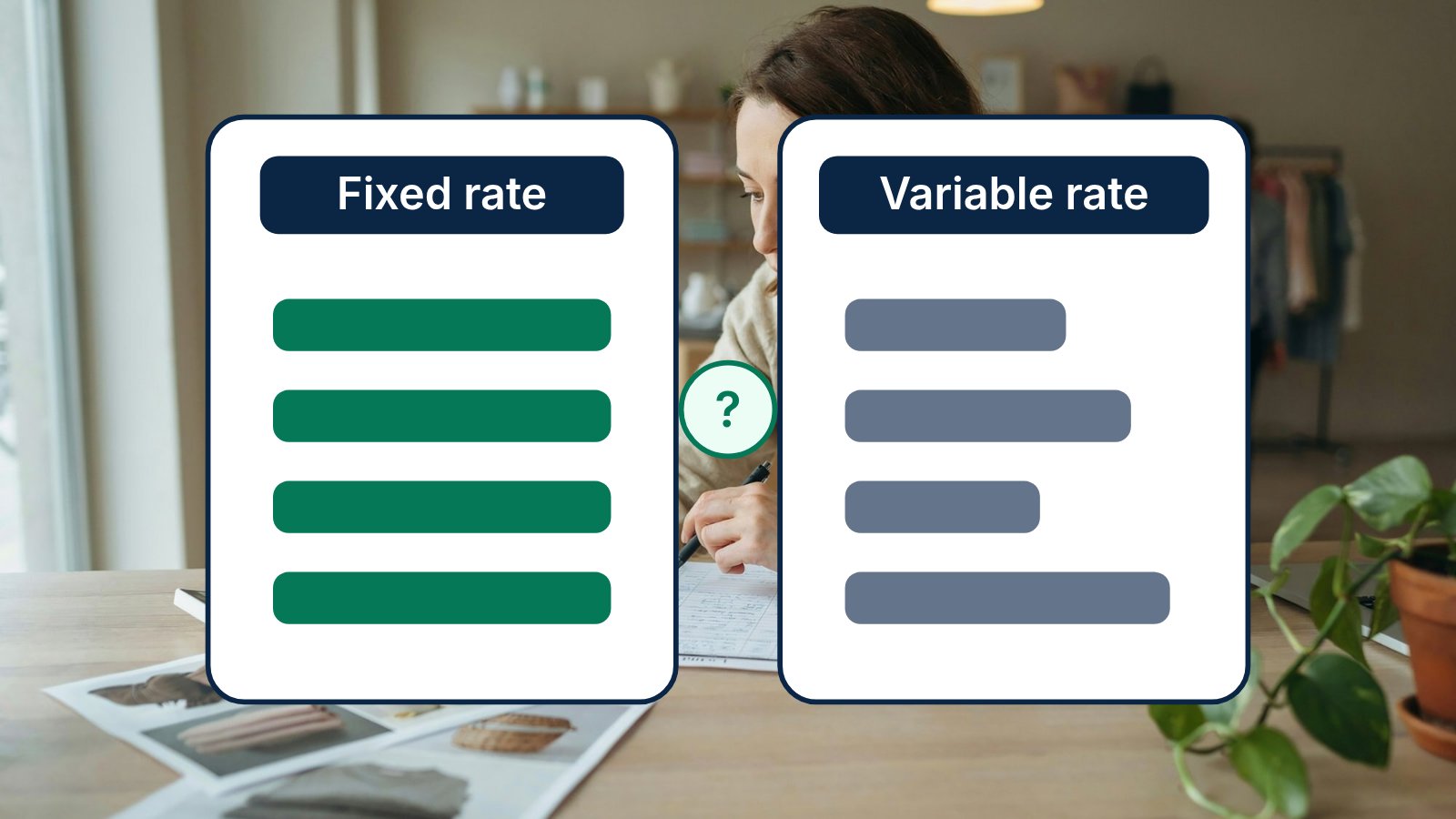
- Fixed-rate 7(a) loans. Because the rate is constant, the payment stays the same.
- Variable-rate 7(a) loans. When the rate changes, the lender may ask for a different payment.
That is the extent of what the page says about a rate change and a payment. It is silent on which benchmark a variable rate tracks, how often the rate can change, whether a floor or cap applies to a standard 7(a) term loan, and how the new payment is worked out. The only caps the page lists belong to its Working Capital Pilot, a line-of-credit program, stated as a spread over a base rate. Those details would sit in your loan documents. If you cannot find them there, ask before you sign.
Your counterpart is the lender, not SBA. SBA provides a guarantee to lenders, and the lender helps you work out which type of loan fits. That makes the lender the person who can answer for your terms.
How the 504 program differs
SBA’s 504 page presents the program as financing for big fixed assets, with a long term and a fixed rate. A Certified Development Company (CDC) works with a senior lender to put the loan together. The page lists 10-, 20- and 25-year maturities, and borrowers with active loans pay through a Central Servicing Agent, usually via monthly ACH draws.
On the rate, the page ties it to a step above the going market rate on 10-year U.S. Treasuries. Two cautions apply:
- It is a different benchmark. The Fed’s target range and the 10-year Treasury market rate are separate numbers. A headline about one is not automatically news about the other.
- The page leaves gaps. Nothing there states when the 504 rate is fixed in place, how the senior lender’s portion is priced, or whether that portion is fixed. “Fixed rate” describes the program, so confirm what it covers in your own financing. SBA points borrowers to their CDC for the specifics of a loan.
Rate type is only one part of the match
Choosing on rate type alone skips the question of what the money is for. SBA’s 7(a) page names working capital as one use, next to refinancing business debt, equipment and real estate. The 504 page points to land, buildings and long-term machinery, and excludes working capital and inventory. If working capital is your need, 504 is not the program that page describes.
None of these sources says one program is cheaper, quicker or easier to obtain, and no program fits every business. To compare other routes, browse the SBA funding hub or read about alternative funding for small business.
A cash-flow readiness routine
The point of all this is readiness: knowing, before the paperwork, whether your cash flow can absorb a payment that moves. Here is one way to do it. It is an editorial suggestion, not a rule.
- Write down your monthly picture. List what comes in and what goes out in a typical month and in a slow one. A loan payment sits on top of those numbers.
- Set your own ceiling first. Decide what monthly payment would leave you comfortable before you see any offer. Only you know that figure.
- Ask for a payment table. Have the lender put in writing what you would owe at a few different rates, so you see a range instead of one figure.
- Hold each payment against your ceiling. If a higher-rate payment crosses it, you have learned something useful before signing, not after.
- Plan the response. Decide in advance what you would adjust if a higher payment arrived, and who you would call first.
- Mark your calendar. If the rate can change, note how notice reaches you and put a reminder where you will see it.
Questions worth asking
These are editorial suggestions, not financial or legal advice, and none describes a right you hold. Some answers may already be in the paperwork.
- Does the rate stay put for the whole term, or can it move? If it can move, what does it follow?
- How often can it change, and how will you hear about it?
- Is there a minimum or maximum rate? Neither SBA page states one for a standard 7(a) term loan or a 504 loan, so ask rather than guess.
- On a 504 loan, which pieces of the financing stay fixed and which can shift? Does the CDC or the senior lender answer for each?
- Besides the rate, what charges apply, and which are due at the start?
If a lender quotes a rate or a cost, keep in mind that a growing number of states make providers, and in some states brokers, give commercial financing cost disclosures such as an estimated APR. Check current law before relying on any figure.
When the answer is no
A better-prepared question does not guarantee an approval, and this guide promises neither approval nor a rate. If an application is turned down, what to do after a business loan denial covers the next steps.
Sources
- Federal Reserve Board, Federal Reserve issues FOMC statement, published July 26, 2023.
- U.S. Small Business Administration, 7(a) loans, undated page, retrieved October 26, 2026.
- U.S. Small Business Administration, 504 loans, undated page, retrieved October 26, 2026.
About the author
The Credisian Editorial Team writes plain-English guides and news on business credit and borrowing, sourced and checked under our editorial policy, to help owners make informed funding decisions.