Alternative Funding for Small Business: SBA Loans, Factoring and MCAs Compared
Alternative funding for small business is not funding without obligations. See how an SBA loan, invoice factoring and a merchant cash advance each work.
Guide · · Updated Oct 26, 2026 · 6 min read
Updated October 26, 2026: SBA details were re-read on that date, and a 2025 contract example was added in this revision.
Most people searching for alternative funding for small business want capital from somewhere other than a bank. Which source fits depends on what the money is for, what your business can sustain and what you sign. “Alternative” is a label. It is not a promise of lighter obligations.
What the label covers
No single definition exists. A nonprofit microlender, a company that buys invoices and a company that buys a slice of future receipts are all called alternatives, yet they do not share terms or mechanics.
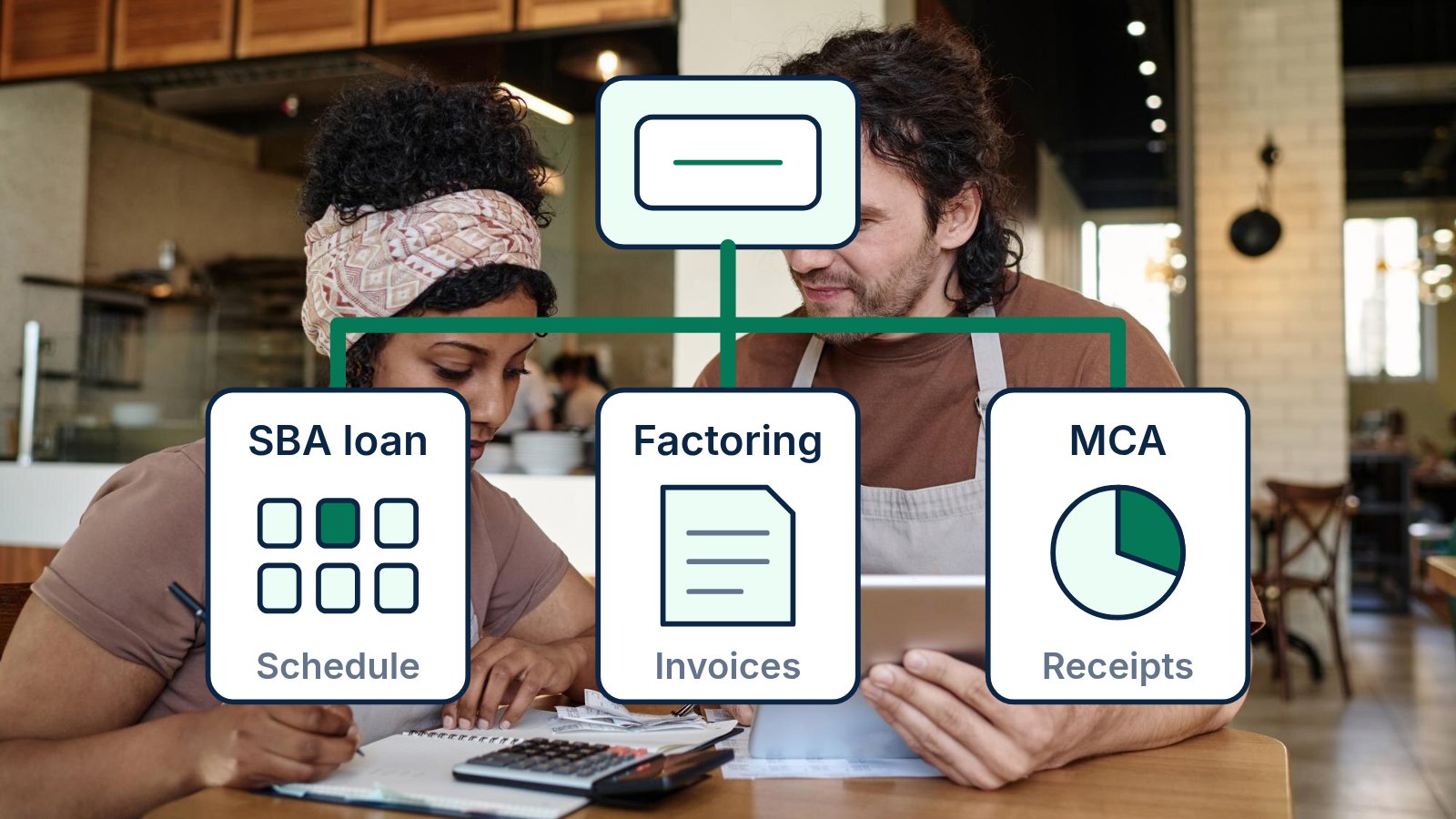
This guide compares three, chosen for how they work: SBA-program loans, which are borrowing; invoice factoring, a sale of invoices at a discount; and a merchant cash advance, structured as a purchase of future receivables. It ranks no provider and makes no claim that any product is quicker or easier to obtain. Bank term loans, lines of credit and equipment financing are outside its scope.
The three at a glance
- SBA-program loan: borrowing from a participating lender, intermediary or development company. Establish who the lender is and what the money may be used for; read the lender’s or intermediary’s documents.
- Invoice factoring: a sale of invoices at a discount. Check which invoices are bought, and what charges and reserves apply, in the factoring contract.
- Merchant cash advance: structured as a purchase of future receivables. The advance contract is where to check how each remittance is set and how to request a reconciliation.
SBA programs: you borrow, and you repay
None of these programs hands you money outright. You deal with a lender, an intermediary or a development company, and you repay. The SBA funding options hub has more.
- 7(a). SBA calls it its primary business loan program. SBA gives lenders a guarantee, and you apply to a lender directly, not to SBA. Listed uses include working capital, equipment, refinancing business debt, real estate and changes of ownership. The listed maximum is $5 million. Applicants must be creditworthy and show a reasonable ability to repay. Most 7(a) term loans are paid monthly, principal and interest, out of business cash flow. If the rate is variable, the lender may ask for a different payment when the rate moves, a point rising rates and business financing explores.
- Microloan. Loans of up to $50,000 come through SBA funding intermediaries, nonprofit community lenders that SBA says make every credit decision and set every term. Working capital, inventory, supplies, furniture, fixtures, machinery and equipment are listed uses. Proceeds cannot pay existing debts or buy real estate. The longest repayment term is seven years.
- 504. Long-term, fixed-rate financing for major fixed assets such as land, buildings and long-lived machinery. A Certified Development Company originates it together with a senior lender, and it is available only through those companies. It cannot fund working capital or inventory. SBA lists maturities of 10, 20 and 25 years.
SBA lenders still underwrite each application. If an existing advance is the reason you are looking at SBA money, read SBA loan refinance for an MCA.
Factoring: invoices sold at a discount
In factoring, you sell specific unpaid invoices to a factor, which pays part of their value now and deals with your customer. Advance rates and fees vary by provider and contract. Your customer’s payment matters, but it is not the only thing that decides what you receive or owe.
One agreement, SouthStar Financial’s “Non-Recourse Factoring and Security Agreement” effective June 11, 2020, shows how much the contract can add. It is a single 2020 example, not typical practice and not an offer.
- The factor chose. The purchaser was not obliged to buy any invoice offered and decided in its sole discretion.
- Waiting had a price. Charges built up with the time an invoice stayed unpaid, and separate fees applied for new customers and for servicing.
- Settlement was net. After collecting, the purchaser paid over the remainder once it had deducted its purchase price, its charges and any reserves it elected to hold. In listed circumstances it could also lower what it advanced, stop buying or keep a reserve account.
- The lien reached further than the invoices. The agreement gave a first-priority security interest in all of the seller’s personal and fixture property.
- It ran for a term. The initial 12 months renewed automatically unless the seller gave notice 30 to 90 days ahead. A minimum annual purchase carried a shortfall charge, and an early termination fee applied.
- “Non-recourse” had edges. The seller still gave warranties, for example that each account was undisputed, and some default events were seller-side. Do not read the word as “no exposure.”
Merchant cash advance: future receivables sold
A merchant cash advance (MCA) is structured as a purchase of future receivables: the merchant gets a purchase price, and the provider takes payment from receipts. The Arin Funding “Standard Merchant Cash Advance Agreement” dated April 1, 2025 is one contract, so treat what follows as one agreement’s wording, not the norm.
- Receipts, by debit. The merchant sold future accounts and contract rights until a stated Receivables Purchased Amount had been delivered, and authorized a daily ACH debit of a specified percentage of receipts.
- An estimate, by choice. The provider could instead debit a fixed estimated payment each week, described as an approximation subject to reconciliation. A merchant wanting one had to ask in writing and supply bank statements or similar records.
- No set end date. The term was “indefinite” and ran until the full amount had been received.
- How the contract describes itself. It says the purchase price is not intended to be a loan. That is the provider’s drafting, not a legal conclusion.
- Fees stood apart. They were itemized separately from the purchased amount. MCA fees covers what to check.
Matching the product to the need
| Your need | Where to start |
|---|---|
| Working capital or equipment through a lender | 7(a) or a microloan; both list those uses |
| Land, buildings or long-lived machinery | 504, which SBA describes for major fixed assets |
| Cash held up in unpaid invoices | Factoring; compare the contract’s charges, reserves and limits |
| Weighing an MCA | Ask how the estimated remittance is set and whether you must request a reconciliation |
No product suits every business or situation. If a lender has already turned you down, start with what to do after a business loan denial.
One agreement can limit the next
Taking a second product can collide with the first. The Arin agreement required the provider’s prior written consent before the merchant entered any arrangement involving those receivables, including a purchase of them, a loan against them or collateral against them. The SouthStar agreement stopped the seller from selling or pledging its accounts to anyone else, gave the purchaser an exclusive right to buy them and barred dealings with anyone who collects repayment by debiting the seller’s account. Both are single contracts, not rules, but they show why to check what you are giving up.
Questions before you sign
- Who sets the terms and the charges?
- What am I selling, or pledging as security?
- What sets each payment: a schedule, my sales or my customers?
- What will this agreement stop me doing with my receivables or accounts later?
- When does it end, and what can end it sooner?
- Which charges come on top of the headline amount?
A note on cost disclosures
This guide quotes no rates because they vary by provider and contract. A growing number of states require commercial financing cost disclosures, including estimated APR, from providers and, in some states, from brokers. Verify current law, and read the disclosure you receive.
Sources
- U.S. Small Business Administration, Microloans (undated; retrieved October 26, 2026).
- U.S. Small Business Administration, 7(a) loans (undated; retrieved October 26, 2026).
- U.S. Small Business Administration, 504 loans (undated; retrieved October 26, 2026).
- Arin Funding, Standard Merchant Cash Advance Agreement, SEC exhibit, dated April 1, 2025 (archived copy retrieved October 26, 2026).
- SouthStar Financial, Non-Recourse Factoring and Security Agreement, SEC exhibit, effective June 11, 2020 (archived copy retrieved October 26, 2026).
About the author
The Credisian Editorial Team writes plain-English guides and news on business credit and borrowing, sourced and checked under our editorial policy, to help owners make informed funding decisions.